The Social Fingerprint
Discernment, Accountability, and the Hard Labor of Family Proof

I. The Confession of a Leaf Clicker
Let me start with a confession that makes my stomach turn: I used to be a leaf clicker.
In the early days of my journey into family history, I fell completely for the intoxicating rush of automated database hints. We all know how the trap is set. You log into a platform, and there they are, vibrant green leaves or flashing icons pulsing on the screen, promising to instantly bridge a two-hundred-year gap in your lineage. You click, and you are shown a beautifully manicured public tree stretching back generations. The tree boasts thirty, forty, fifty sources. It looks immaculate.
Sitting at my desk late at night, I would bargain with my own common sense. “Look at the sheer volume of records they’ve attached,” I’d tell myself. “They have clearly done the extensive, grueling research that I simply haven’t had the time to do yet. There is no way someone would build a tree this large out of thin air. It must be right.”
So, I clicked merge. I added the ancestor. I watched my tree grow overnight by leaps and bounds, feeling a profound, yet completely unearned, sense of accomplishment.
It was a total illusion. And it cost me months of my life.
I didn’t realize back then that modern platforms use automated algorithms and AI engines designed to aggressively scrape records and attach them to trees as hints. These algorithms operate on basic pattern matching, not historical proof. They see a similar surname, a vague date range, and a general geographic region, and they blindly serve it up as a “match.” More often than not, these automated hints are completely incorrect. They create a digital echo chamber where one machine-generated error is copied by dozens of well meaning users.
By bypassing the hard, manual labor of actual verification and trusting those automated hints, I introduced a virus into my database. I spent months traveling down entirely wrong bloodlines, mapping out complex histories, tracking pioneer migrations, and genuinely mourning the tragic deaths of historical figures who did not share a single drop of my family’s blood.
Every time I look back at that phase of my research, I remember the deep, gnawing knot that used to form in my stomach. It wasn’t just an inconvenience or a passing bout of imposter syndrome. It was my researcher’s conscience, the innate intuition of someone who respects the past, warning me that I was building an ancestry out of shifting sand. I learned the hard way that if you do not feel absolute, structural confidence in a line, you must leave the space blank. A blank space on a pedigree chart is a badge of honor; it is an explicit declaration that you respect the dead too much to hand them a convenient fiction.
II. The Internal Axis: The Tiny Details of Oscar Burgdorf
The danger of shortcut genealogy, the illusion of the “single source,” and the failure of automated matching became painfully real to me when I turned my attention inward to a line where identity was never supposed to be in question: my own Burgdorf line.
Oscar Burgdorf is my great-grandfather. His place on my tree was never a mystery; his relationship to our living family was an established fact. Yet, the history attached to him, the narrative that had been passed down, written into typed family summaries, and accepted for generations, was completely distorted. The researcher who came before me was not a careless person, nor was he taking lazy shortcuts. He had actually done the footwork to gather several official records for Oscar. He simply accepted the dates written on those papers at face value, without realizing that even a collection of official documents can hold deep contradictions if you do not map out the strict chronological timeline.
He had looked at Oscar’s death certificate and the surrounding paperwork, taken the dates written on them, and compiled them into the family narrative. He did what most well-meaning researchers do: he trusted the official ink. He did not realize that even when you have multiple records in hand, they can still fail to align with the hard facts of a person’s life if the tiny details are not cross-examined.
When I finally resolved to hold my tree to the rigorous standards of the Genealogical Proof Standard (GPS), I went back to the raw, primary sources. I stopped looking at the compiled summaries and began an exhaustive, multi-angled timeline analysis of Oscar’s life. I pulled up his marriage certificate, dug into his military records, verified his gravesite, and systematically traced him page by page through the census records.
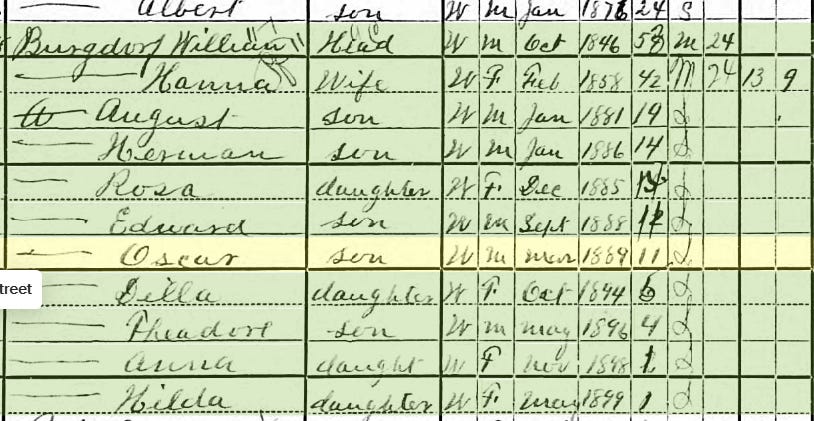
When I aligned these records, the pristine family narrative shattered. The previous researchers, and the automated hints they relied on, had completely missed the fabrications hidden in plain sight. Oscar’s recorded birthdate didn’t belong to him at all; it was actually the birthdate of his older brother, carelessly assigned to Oscar somewhere down the line. Even more striking, his date of death had been purposely altered on the official record to November 11th (11/11), a poetic attempt to align his passing with Veterans Day, when the primary military and burial documents stated the factual truth: he passed away on November 13th (11/13).
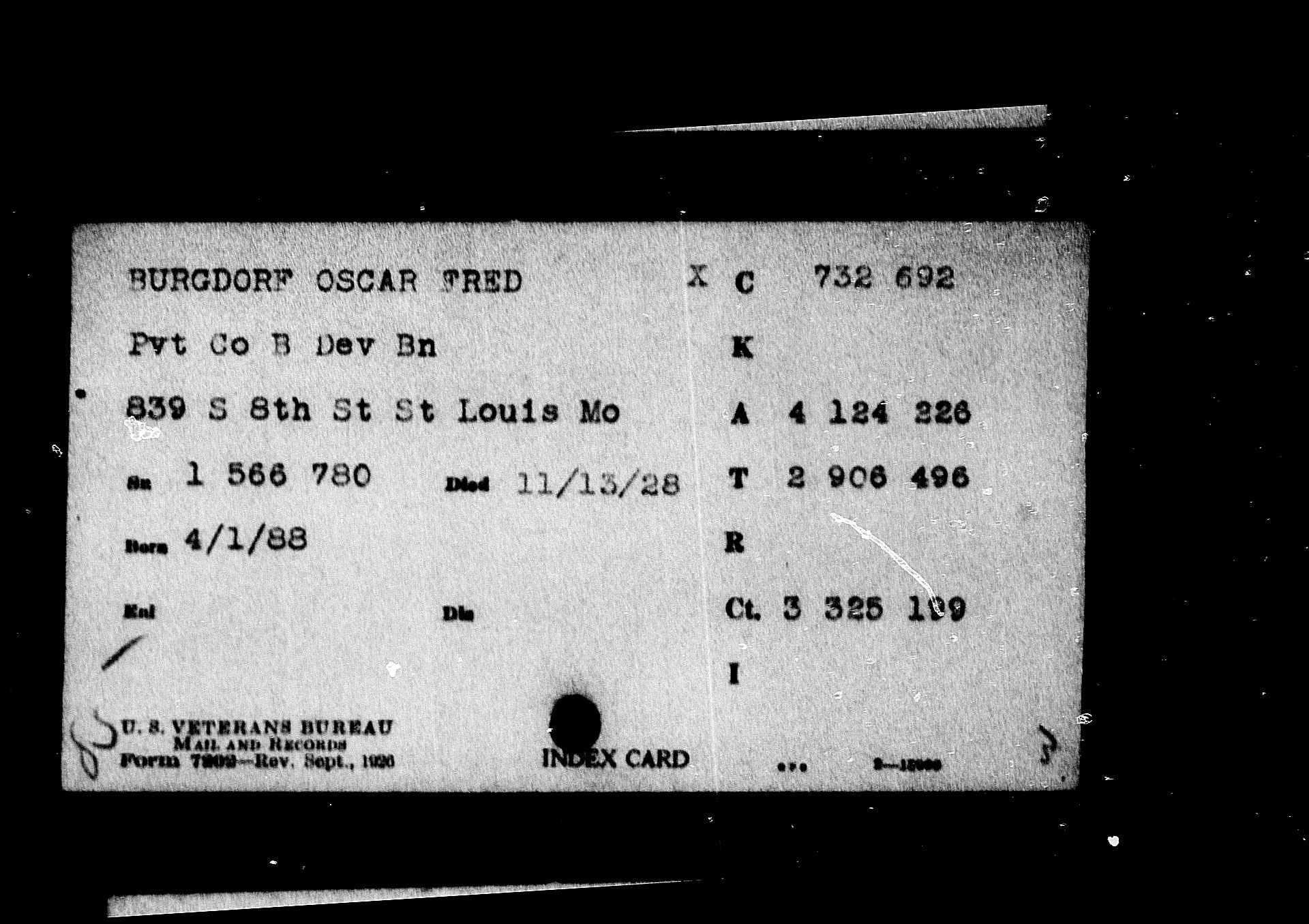
The census records, taken across multiple decades of his life, told an entirely different, undeniable story that completely defied the timelines on that death certificate. In genealogy, we learn that a death certificate is secondary evidence for a birthdate, reported by a grieving informant who often had no firsthand knowledge of the event. By combining the census timelines with his primary military files, the raw data spoke an unyielding reality about his true timeline.
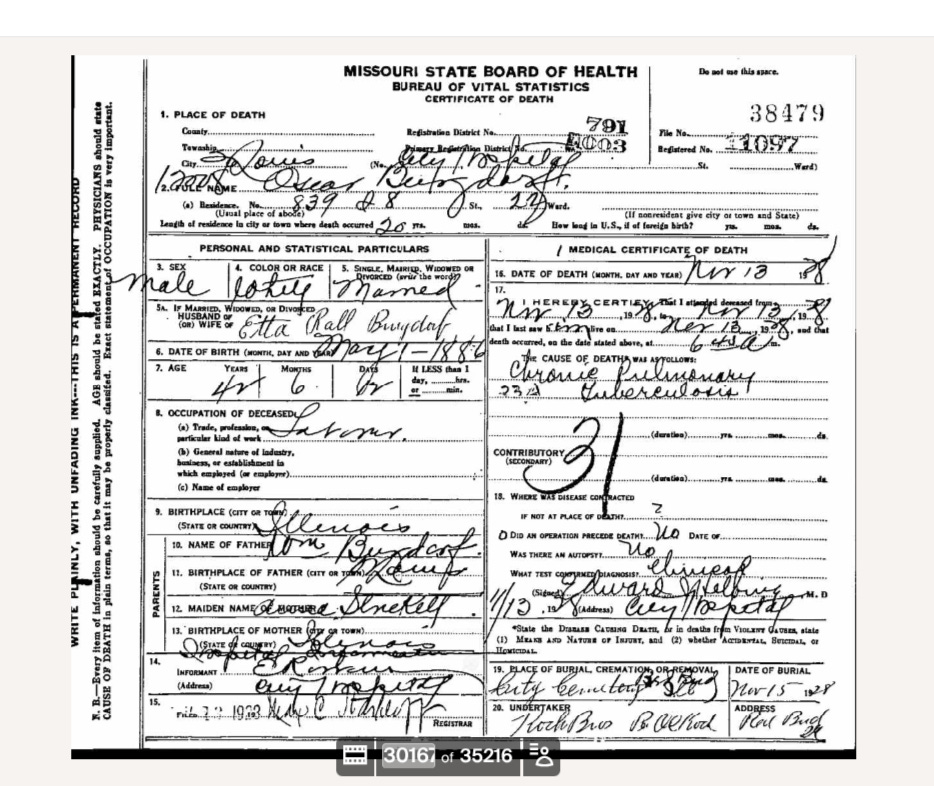
Correcting Oscar’s records didn’t require me to lop off a branch of my tree, but it did require me to alter an established family timeline. When I brought the true dates forward, it caused a wave of quiet tension. There was a natural hesitation to see a long-accepted narrative replaced by new facts, making it a quiet test of my research integrity.
That experience was a trial by fire for my research discernment. It forced me to ask a fundamental question that every true genealogist must eventually face: Who is our ultimate loyalty to? Is it to the comfort of the living, or is it to the absolute truth of the dead? I chose Oscar. I changed the dates. I stood my ground against the disapproval because the facts stated otherwise. That project taught me to trust my discernment over collective opinion, and it sharpened the exact mental tools I would need to tackle the ultimate mystery of my ancestry: finding my 4th and 5th great-grandfathers.
III. The Patterson Paradox and the Trap of Family Lore
If correcting Oscar’s timeline was a lesson in internal precision, tracking my 4th and 5th great-grandfathers was a lesson in separating parallel lines and dismantling inherited myths. I didn’t need to discover who they were or where they came from; I already knew their names and their origins. The problem wasn’t a lack of information; it was an absolute flood of it, compounded by family lore that kept me completely stuck for years.
I grew up believing a specific narrative: that our Patterson bloodline belonged to the historic, well-documented Pattersons of Florissant, Missouri. It made perfect sense on the surface. They were prominent, they were local to the region, and they were firmly established in the local histories. For a long time, that lore acted as a mental anchor. I focused my energy on trying to force my branch into that Florissant tree. Online database algorithms only encouraged the error; because the names and the general geographic area aligned, the platforms constantly fed me hints trying to cement that connection.
But the deeper I dug, the more the structural timelines groaned under the weight of that assumption. My true ancestors were completely obscured by an overwhelming crowd of parallel Patterson lines, men with the exact same first names, living in the same broad Missouri landscape, but belonging to entirely different bloodlines with entirely different migration paths.
Modern genetic tools only added to the illusion. When I audited public trees, I found verified DNA matches attached to those tangled, merged Florissant branches. It is the ultimate trap of modern genetic genealogy: assuming that because someone is a verified DNA match, every name on that match’s tree must be gospel. A DNA match only proves a shared biological connection somewhere down the line; it does not validate that person’s tree architecture. Those public trees had been built on automated AI hints and copied family lore. The DNA matches were real, but they were tethered to completely wrong, non-blood lines on paper. They simply had not done their exhaustive research, and the algorithms had rewarded their shortcuts by tangling our lineages together.
I knew that if I wanted to find the correct Pattersons and test the truth of the Florissant lore, I had to ignore the genetic shortcuts, tune out the background noise of the parallel lines, and enter page-by-page census purgatory.
IV. The Limits of the Machine and the Power of the FAN Club
To break the deadlock, I stopped looking for records neatly indexed under the Patterson name. Instead, I began auditing those public trees and looking directly at the primary census records that the algorithms had blindly pinned to unrelated families. Because my discernment had been sharpened by the Oscar Burgdorf project, I didn’t take those automated attachments at face value. I looked at the actual digital images of the census sheets and scrutinized the timelines, the ages, and the household structures.
Suddenly, my research intuition flared. The dates and timelines on those specific census records completely contradicted the Florissant Pattersons they were currently attached to. The platform’s AI had made a massive error, matching names while ignoring impossible chronological timelines, and unthinking researchers had blindly clicked accept. The household compositions didn’t fit their branches at all; but they fit my true, elusive Patterson grandfathers perfectly. The family lore was wrong. My line wasn’t from Florissant.
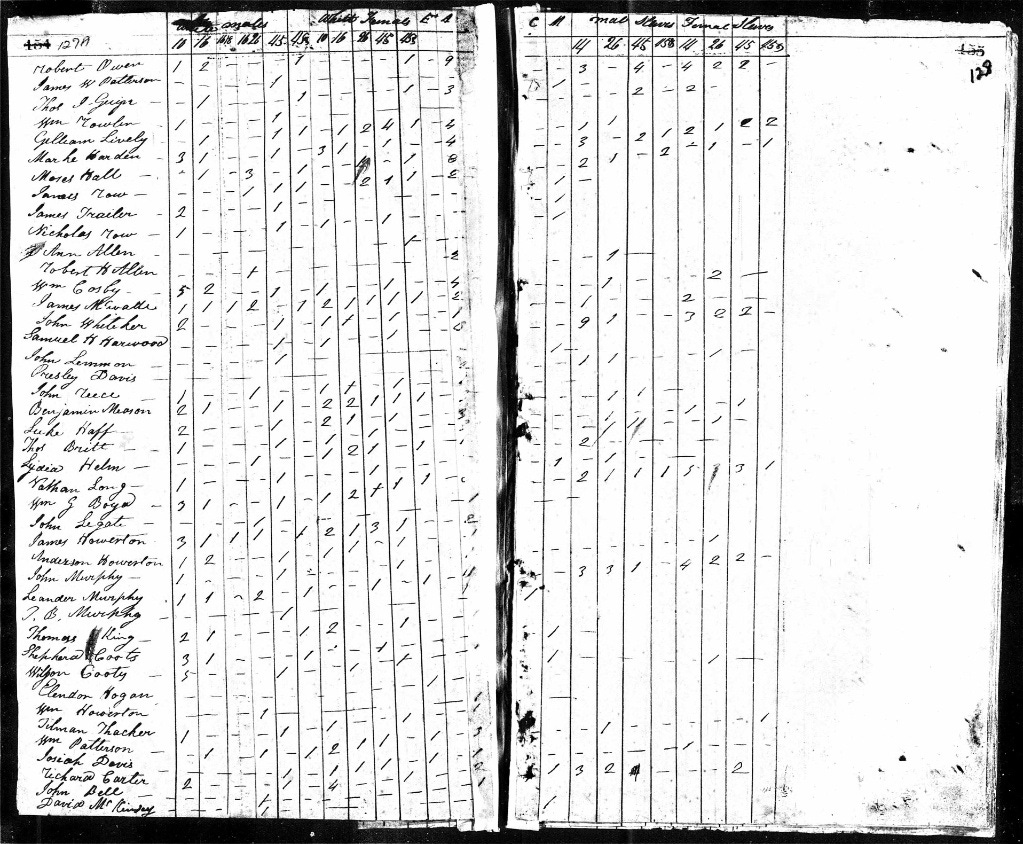
Once I pulled those misallocated census records into my own workspace, I used the FAN Club (Friends, Associates, and Neighbors) to prove they belonged to my grandfathers and isolate them from the parallel lines.
Our ancestors never lived, worked, or traveled in a vacuum. I systematically mapped the names listed five doors up and ten doors down on those rescued pages. I tracked the witnesses on their marriage bonds, the executors of their wills, and the securities on their probate files.
As I lined up these community spreadsheets, an undeniable pattern emerged. The neighbors listed surrounding the “ghost” Pattersons on these census records weren’t strangers. They were a specific, predictable cluster of neighboring surnames that had lived adjacent to my ancestral line in their old eastern homesteads decades prior. The entire neighborhood had packed up and migrated together across state lines, bypassing Florissant entirely to lay down roots along a completely different path.
By tracking the clear, beautifully documented paper trail of the neighbors, I verified that these census records belonged to my true line. The overlapping circles of the FAN club had created a social fingerprint that was completely unique. Two Patterson families in the same territory might share the exact same names, but only my 4th and 5th great-grandfathers lived next to those specific neighbors, signed those specific deeds, and moved within that exact ancestral migration wave.
V. The Triumph of Certainty
The moment the final pieces of that circumstantial web clicked into place across those census pages, the emotional landscape of my research changed forever. The lingering fog of non-confidence, the anxiety that had haunted my early years as a researcher, evaporated instantly. It was replaced by an unbreakable, structural certainty.
This breakthrough wasn’t a stroke of luck. It wasn’t handed to me on a silver platter by a green leaf hint, nor was it validated by an inherited piece of family lore or a DNA match who copied an unverified public tree. I earned it through relentless, unyielding critical analysis. I held myself accountable to my past mistakes, I stood my ground against family disapproval to preserve historical truth with Oscar Burgdorf, and I did the heavy lifting required by the Genealogical Proof Standard to separate my true grandfathers from the crowd.
To anyone sitting at their desk late at night, staring at a historical hint with that familiar, gnawing ache of doubt in their gut, I give you this advice: Trust your discernment. Remember that database AI adds records to trees as hints that are more than often completely incorrect, and a family story is just a hypothesis until the primary sources back it up. Step away from the shortcuts. Turn off the automated hints. Leave the branch blank until you have done the work.
Let your doubt drive you deeper into the raw, unindexed records, the land plats, the probate boxes, and the neighborhood networks. The grind is punishing, and it will leave you mentally wiped out. But when you finally put two and two together through the power of the FAN club, the confidence you feel will be absolute. You will know, without a shadow of a doubt, that you haven’t just filled a blank space on a chart; you have truly found your people, and you have brought them home the right way.